
Equity benchmark indices are facing massive corrections, with the NSE Nifty declining over 14 per cent from its lifetime high hit in September last year due to several negative triggers like stretched valuations, foreign fund exodus, disappointing quarterly earnings and rising global trade tensions dragging markets lower. The BSE benchmark Sensex hit its record peak of 85,978.25 on September 27 last year, and the Nifty also reached a lifetime high of 26,277.35 on the same day.

The 'mediation' by the United States from behind the scene on the diplomatic track appears to be once again working, which calls on both Delhi and Islamabad to show restraint and pull back from a military confrontation, notes Ambassador M K Bhadrakumar.

Chief Minister MK Stalin has shown that he is cut from a different cloth when it comes to embracing what is current, modern and absolutely necessary. Thus, even while retaining the spirit and content of the pan-Tamil, Dravidian socio-political and socio-economic ideology to the 't', his government has also acknowledged the need to accepting scientifically-proven facts in operational matters, says N Sathiya Moorthy.

There are indications or signs of the economy picking up -- collection of GST and consumption of electricity, said former RBI governor, C Rangarajan.

As India faces slowing economic growth, HSBC Global Research has downgraded the Indian stock market outlook from "overweight" to "neutral". In a report, the global financial services firm said profits at India Inc appeared to have softened while valuations are elevated. After annualized growth of 25 per cent in recent years, profits appear to have softened while valuations are elevated at 23x forward earnings.

Foreign investors have pulled out Rs 22,420 crore from the Indian equity market so far this month, owing to high domestic stock valuations, increasing allocations to China, and the rising US dollar as well as Treasury yields. With this sell-off, Foreign Portfolio Investors (FPIs) have recorded a total outflow of Rs 15,827 crore in 2024 so far. As liquidity tightens, FPI inflows are expected to remain subdued in the short term.

In a statement, the Population Foundation of India said it is deeply concerned about recent media reports "misreporting" the findings from the study to spread alarm regarding the growth of the Muslim population in the country.
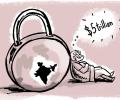
India decisively withstood global headwinds in 2023 and is likely to remain as the world's fastest-growing major economy on the back of growing demand, moderate inflation, stable interest rate regime and robust foreign exchange reserves. Despite widespread pessimism witnessed among the developed nations and the worsening geopolitical situation, India recorded a gross domestic product (GDP) expansion of 6.1 per cent in the March quarter. The growth moved up to 7.8 per cent in the June quarter and was 7.6 per cent in the September quarter. For the first six months of this fiscal, the growth was 7.7 per cent.

India's office market was very active in 2024 with gross leasing of workspace witnessing a 19 per cent increase to a record 885.2 lakh square feet across eight major cities, according to Cushman & Wakefield. The gross leasing or absorption of office space stood at 745.6 lakh square feet in the preceding year, data from real estate consultant Cushman & Wakefield (C&W) showed.

Foreign investors have continued selling in the Indian market, pulling out a massive Rs 85,790 crore (around $10.2 billion) from equities this month due to Chinese stimulus measures, attractive stock valuations, and the elevated pricing of domestic equities. October is turning into the worst-ever month in terms of foreign fund outflows. In March 2020, FPIs withdrew Rs 61,973 crore from equities.

'The real lifting of the economy will happen only if this momentum sustains in the coming months.'


Using the debt-to-GDP ratio as a fiscal anchor aligns with efforts to promote fiscal transparency through proper disclosure of off-budget borrowings.

Prime Minister's key economic advisor C Rangarajan on Friday lowered the growth forecast for the current fiscal to 5.3 per cent from 6.4 per cent projected earlier and listed out host of measures including further liberalisation of foreign direct investment norms to improve economic condition.

The Economic Advisory Council to the Prime Minister, of which he is chairman, has quickly sought to distance itself and the government from Dr Debroy's views.

The National Security Strategy document should flag all major issues concerning security strategy and provide guidelines to concerned departments to work out suitable action plans. Since the global and regional geopolitical canvas is dynamic, the NSS document should be deliberated at length before formulation and should be reviewed periodically, recommends Commodore Venugopal Menon (retd).

They want govt to raise excise duty and service tax rates, cut subsidies.

According to the latest Budget papers, the staff strength of central ministries and departments is estimated to rise by 276,796 to 3.44 million at the end of FY23, it would be up by 109,266 to 3.55 million in March 2024.
Despite slowing down, China and India continue to contribute more than half of the world's economic growth, a new report by an investment management and advisory services firm has claimed.
C Rangarajan, chairman of the Prime Minister's Economic Advisory Council, on Thursday said he expects the Indian economy to grow by 8.5 per cent in FY'12 on the back of services sector and industry expansion, though he hinted that agriculture might not be a big contributor.
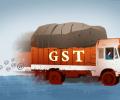
Goods and Services Tax collections jumped 10.4 per cent to over Rs 1.72 lakh crore in January, reflecting buoyant economic activity and setting the stage for the next phase of GST reforms. This is the second-highest monthly collection ever and marks the third month in this financial year with a collection of Rs 1.70 lakh crore or more, a finance ministry statement said on Wednesday.

Businesspersons who have the potential to contribute to the economy of a country are given a red carpet welcome by way of a start-up visa.

With the Budget barely a week away, the Prime Minister's Economic Advisory Council on Monday made a case for withdrawing some of the tax incentives to the industry to put the economy back on track for fiscal consolidation.

rediffGURU Geeta Ratra offers expert advice on international courses, student visas, immigration processes and more.

Amid fears of a third wave of coronavirus pandemic and hardening of retail inflation, the Reserve Bank is likely to maintain status quo on interest rate and watch the developing macroeconomic situation for some more time before taking any decisive action on monetary policy. The RBI is scheduled to announce its bi-monthly monetary policy review on August 6 at the end of the three-day meeting -- August 4-6 -- of the Monetary Policy Committee (MPC). The RBI Governor-headed six-member MPC decides on the key policy rates.
Indian rupee, which earlier this week touched an all-time low, is likely to remain under pressure and may test new levels as a fallout of the US Federal Reserve indicating more interest rate hikes, experts said. The aggressive rate hikes will dampen demand and increase the possibility of a recession in the US. This could accelerate the pace of capital outflows, weaken the rupee and raise the threat of imported inflation.

Rumours in the bureaucracy on his successor include the names of Sajjid Chinoy of JP Morgan, Rathin Roy of the National Institute of Public Finance and Policy, Neelkanth Mishra of Credit Suisse and the principal economic advisor, Sanjeev Sanyal.

A small Ahmedabad-based chartered accountancy firm, whose appointment was questioned by a US short seller in its scathing report against the conglomerate run by billionaire Gautam Adani, has resigned due to "pre-occupation", Adani Total Gas Ltd said. Hindenburg Research in its January 24 report that levelled allegations of fraud, stock manipulation and money laundering against the Adani group, had also raised the issue of the size and capability of the firms auditing the conglomerate. Adani group has repeatedly denied all allegations.

The Reserve Bank of India has forecast the economy to grow by 6 per cent with an upward bias.

India's rupee is likely to remain under pressure due to high prices of crude oil and other commodities, and may stabilise at around 79-80 against the US dollar in the near term, say experts amid limited headroom available with the Reserve Bank to check the weakening of the domestic currency. The currency has slumped over 5 per cent this year after Russia's invasion of Ukraine sent international crude oil prices soaring to a decade high. On Monday, rupee ended at a fresh all-time low of 78.34 (provisional) against the US dollar.

Manufacturing companies have been outperformers on the bourses in the current year, leading to a rise in their weighting in the benchmark index. Companies in sectors such as FMCG, automobile, pharmaceuticals, metals, cement, and agrochemicals now account for 25.43 per cent of the Nifty 50 index, up 88 basis points from 24.55 per cent at the end of December last year and a record low of 23.1 per cent at the end of CY20. The manufacturing sector is now dominated by FMCG majors such as Hindustan Unilever, ITC, Asian Paints, Nestle, and Britannia, accounting for 45 per cent of the combined market cap of all manufacturing companies in the index.
Experts say it will now be tough for the Modi government to catch up with the UPA's economic record owing to the shock induced by the currency demonetisation.

Year by year, our cities remain defeated in the face of weather conditions, costing us time, money, resources and often lives, observe Amit Kapoor and Bibek Debroy.

In a dazzling resurgence, foreign investors have graced the Indian equity markets with an influx of nearly Rs 1.5 lakh crore in 2023, fuelled by optimism over the country's resilient economic fundamentals amid shadows of a gloomy global scenario. Experts believe that the positive trend may continue in 2024. This follows Indian equities witnessing the worst-ever net outflow of Rs 1.21 lakh crore by FPIs in 2022 on aggressive rate hikes by the central banks globally after net inflows for three consecutive years.

A presidential advisory sub-committee has recommended the federal government to extend the grace period for H1-B workers, who have lost their jobs, from the existing 60 days to 180 days so that the workers have enough opportunities to find a new job or other alternatives. "The immigration subcommittee recommends the Department of Homeland Security and the US Citizenship and Immigration Services (USCIS) to extend the grace period for H1-B workers, who have lost their jobs, from 60 days to 180 days," Ajay Jain Bhutoria, member of the President's Advisory Commission on Asian Americans, Native Hawaiians, and Pacific Islanders, said on Tuesday. In his presentation, Bhutoria highlighted the significant challenges faced by H1-B workers laid off from their jobs.

The Planning Commission in May 2012 had constituted the expert group under the then Prime Minister's Economic Advisory Council Chairman C Rangarajan to review the Tendulkar Committee methodology for estimating poverty, following an uproar over the number of poor in the country.

The panel noted that the macro-economic fundamentals of the economy are sound but challenges remain, several of which are structural in nature.

'Similar to the case of the digital payment system where the government created a public platform and others joined in, we are exploring a similar structure to create a PPP platform where the compute required for AI could be accessed by the small player.'

The panel may include or seek inputs from former RBI Governor Urjit Patel, former chief economic advisor Arvind Subramanian, Sajjid Chinoy of the PM-EAC, Rathin Roy, among others.

rediffGURU Rohit Gupta, co-founder and COO of College Vidya, offers expert advice on career programmes in India.
